

Business Coaching vs. Business Navigating
What is Business Navigating?
At Core Score, we understand that business coaching and navigating are both essential tools in achieving success.
While business coaching involves providing guidance and support to help individuals reach their goals, navigating involves assessing and adapting to the challenges and obstacles that may arise along the way.
Our experienced consultants offer a unique blend of coaching and navigating techniques to help individuals and businesses overcome obstacles and achieve their desired outcomes.
Business coaching and business navigating are two approaches that aim to support and guide businesses towards their goals. While there may be some overlap in their methodologies, they differ in their specific focus and the nature of their guidance.
Business Coaching vs. Navigating
Business coaching and business navigating are two approaches that aim to support and guide businesses towards their goals. While there may be some overlap in their methodologies, they differ in their specific focus and the nature of their guidance.
Listen to Mark Queen, owner of Core Score, explain the benefits and differences of business coaching vs. navigating. Mark expands on the importance of keeping God and family balanced, while reaching your business destination.
What is Business Coaching?
Business coaching involves working closely with business owners or executives to enhance their skills, overcome challenges, and achieve their professional objectives. A business coach typically provides guidance, support, and expertise in various areas of business operations. The primary focus is on personal and professional development, helping individuals optimize their performance and achieve their full potential.
Business coaching and business navigating are two approaches that aim to support and guide businesses towards their goals. While there may be some overlap in their methodologies, they differ in their specific focus and the nature of their guidance.
Key aspects of business coaching include:
Goal-setting
Coaches help define clear, actionable goals and create step-by-step plans to achieve them effectively.
Skill Development
Identifying skill gaps, coaches provide training and resources to enhance capabilities and knowledge.
Accountability
Coaches hold clients accountable with regular check-ins and offer strategies to overcome business challenges.
Problem Solving
Coaches assist individuals in identifying and overcoming challenges they face in their business. They may offer different perspectives, suggest strategies, and help individuals develop effective problem-solving skills.
Business Navigating
Business navigating refers to the process of guiding businesses through complex environments, industry changes, and market dynamics. Navigators focus on external factors that impact the business and help organizations adapt, innovate, and seize opportunities. Their role is to provide strategic direction and help companies make informed decisions. While business coaching focuses more on individual and skill development, business navigating is more concerned with strategic decision-making and adaptation to the external environment. Both approaches can be valuable for businesses depending on their specific needs and challenges.
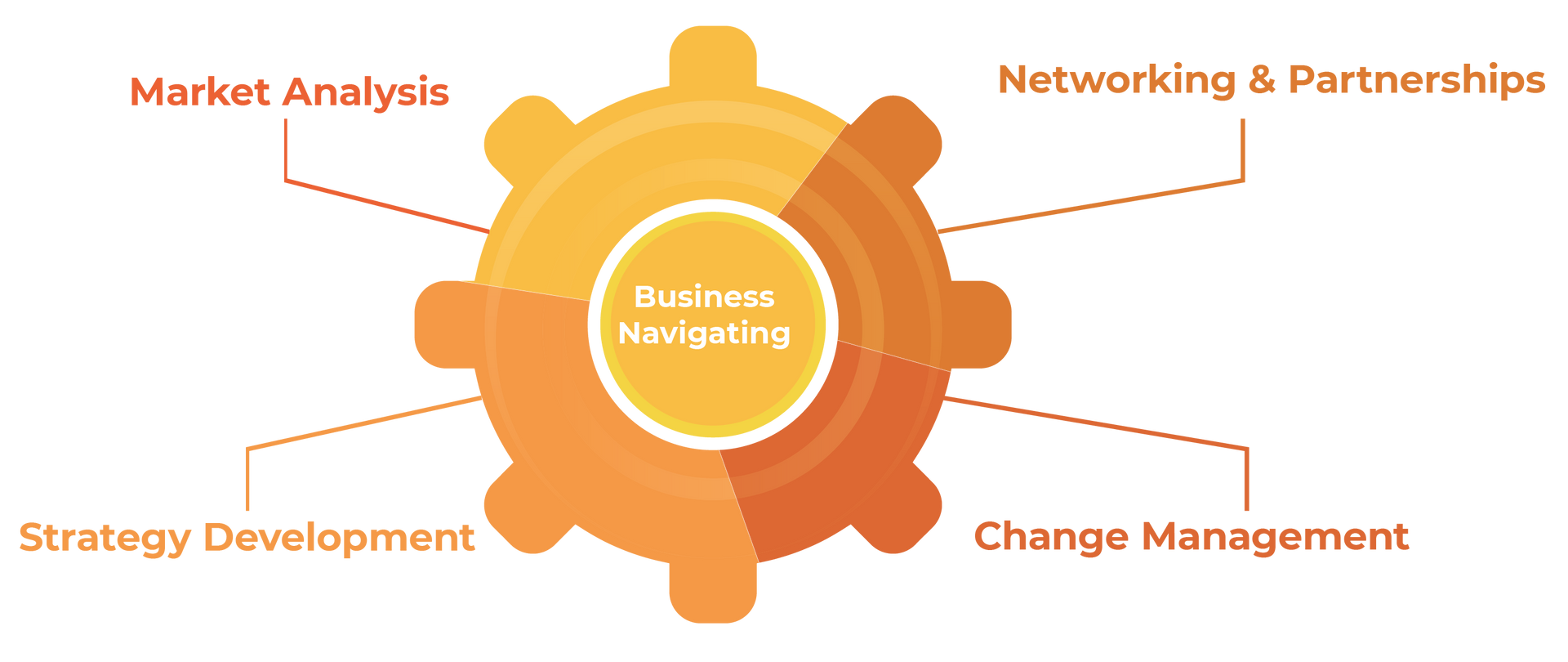

Market Analysis
Navigators use and encourage market research and analysis to identify emerging trends, customer needs, and competitive landscapes. They help businesses understand the market dynamics and make informed decisions based on the insights gained.

Strategy Development
Navigators work with business leaders to develop effective strategies that align with the organization's goals and the market environment. They help define the direction, competitive positioning, and value proposition of the business.

Change Management
Navigators assist businesses in managing transitions, adapting to industry changes, and implementing new strategies. They support leaders in navigating organizational changes, overcoming resistance, and ensuring smooth transitions.
Networking and Partnerships
Navigators help businesses establish and nurture strategic partnerships, alliances, and networks. They identify opportunities for collaboration, connect businesses with relevant stakeholders, and facilitate growth through strategic relationships.